Commercial Farms - Good Agricultural Practices (GAPs)
Although not part of the Division’s mandate, commercial cocoa production started as cocoa demonstration farms but later expanded into commercial farms.
Demonstration of Good Agronomic Practices
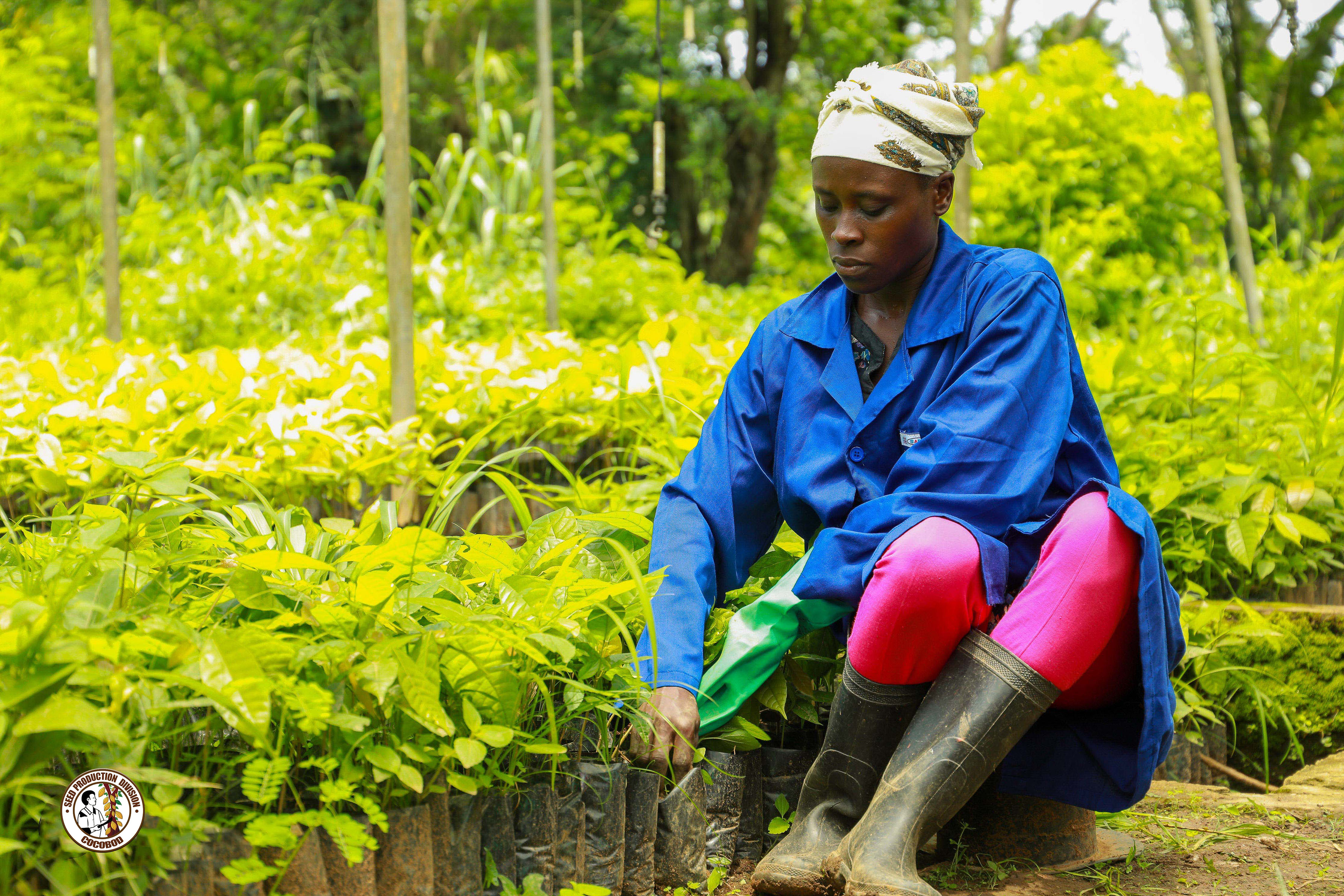
The Seed Production Division - (COCOBOD) not only provides high-quality hybrid seeds for cocoa and coffee but also offers field-based training and demonstration opportunities on Good Agronomic Practices (GAPs). Through practical training on our cocoa and coffee plantations, farmers, students, and extension officers learn modern production techniques from the use of improved hybrid seedlings and proper land preparation to crop management during the yield-bearing phase. When properly implemented, these practices can support potential yields of around 2.0 t/ha.
Land Preparation
- Adopting a no-burn strategy to enhance soil organic matter accumulation
- Identifying and removing potential sources of pests and diseases
- Eliminating infected cocoa trees to prevent the spread of Cocoa Swollen Shoot Virus Disease (CSSVD)
Crop Establishment
- Planting at the appropriate time of the season
- Preparing adequate planting holes to support root development
- Handling seedlings carefully during transport from the nursery to the farm and during transplanting
Juvenile Crop Care
- Fertiliser application to support plant growth
- Regular weed management
- Formative pruning to shape the tree canopy
- Shade management through planting recommended shade tree species
- Soil water management using green mulch and organic materials
Managing the Crop in the Yield-Bearing Phase
- Pruning to maintain canopy structure and improve airflow
- Effective weed management
- Appropriate fertilisation
- Manual pollination where necessary
- Integrated pest and disease control
Harvest and Post-Harvest Management
- Timely harvesting of mature pods
- Proper fermentation and drying
- Appropriate storage and transportation
Training and Demonstration Sites
The Division’s cocoa and coffee plantations serve as training and demonstration sites for students, farmers, and extension workers. These facilities support hands-on learning and the transfer of improved agronomic knowledge across the cocoa and coffee sectors.